Is there a better feeling than coming home after a long day, having a hot shower, throwing on some pajamas, and curling up into bed?
The only problem with this dream of an evening that’s overlooked is sleeping with wet hair, and as it turns out, going to bed with wet hair isn’t advised.
What happens when you sleep on wet hair?
The first issue with sleeping with wet hair is, admittedly, vain: You won’t know how your hair is going to look the next morning.
“If you try to style your hair in the morning after sleeping on it wet, you’re probably going to have trouble styling the resulting frizziness, funny waves, flat sides, and crinkles,” says Olga Gilbert, a hairstylist at J. Russell Salon in Palm Desert, California.
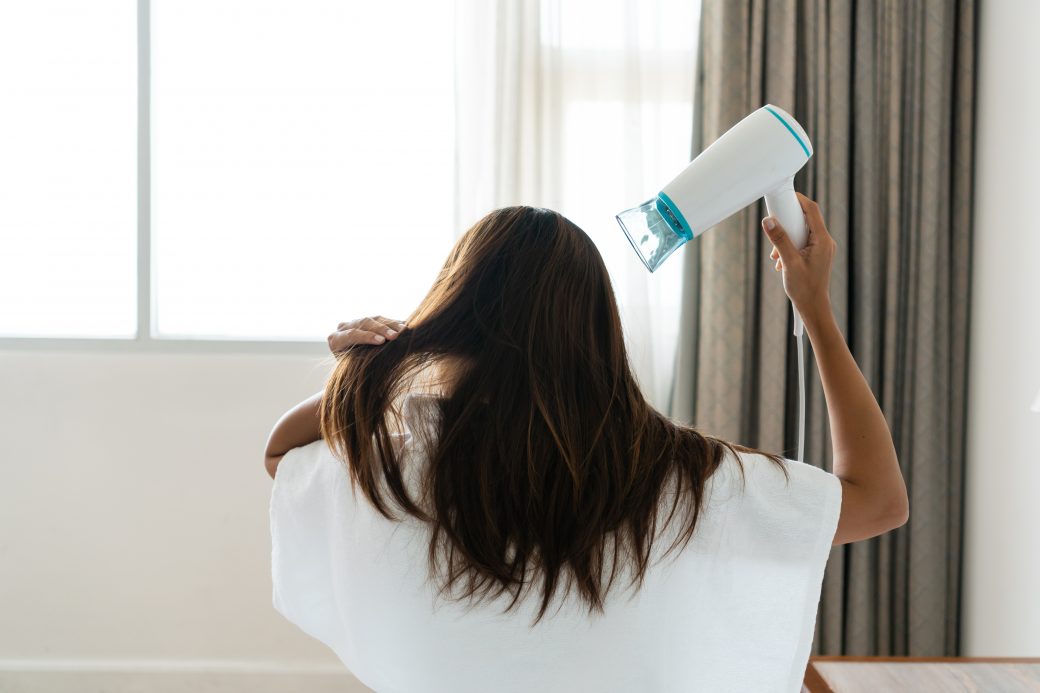
“When you wake up to unruly bedhead, you’re probably going to have to re-wet it again to properly dry it and regain control. This unnecessarily adds time to your morning routine,” she adds.
Gilbert says that while sleeping with wet hair won’t damage hair follicles or shaft right away, it’ll lead to unwanted things like hair breakage. Hair is weakest when its wet, as it’s more pliable and easy to break.
“If you pull your wet hair up into a tight ponytail or bun, you have a much greater chance of breaking it during the night,” Gilbert says.
Related: What You Didn’t Know About Gray Hair
What to do if you sleep with wet hair
If you can’t avoid sleeping with wet hair because you just don’t have time for a morning shower, there are still some things you can do to minimize damage.
First, opt for silk bed sheets rather than cotton ones. Silk’s smoother profile is easier on the hair; a silk pillowcase won’t lead to as much breakage.
Next, make sure to sleep with your hair down or in a loose braid, instead of up in a tight bun or ponytail. Finally, you can swap your tight, elastic bands with a clip or softer scrunchy that isn’t going to roughly pull all night.
Photo Credit: GBALLGIGGSPHOTO/Shutterstock.com; Opat Suvi/Shutterstock.com